Serving West Des Moines, IA and surrounding areas. (515) 706-9183
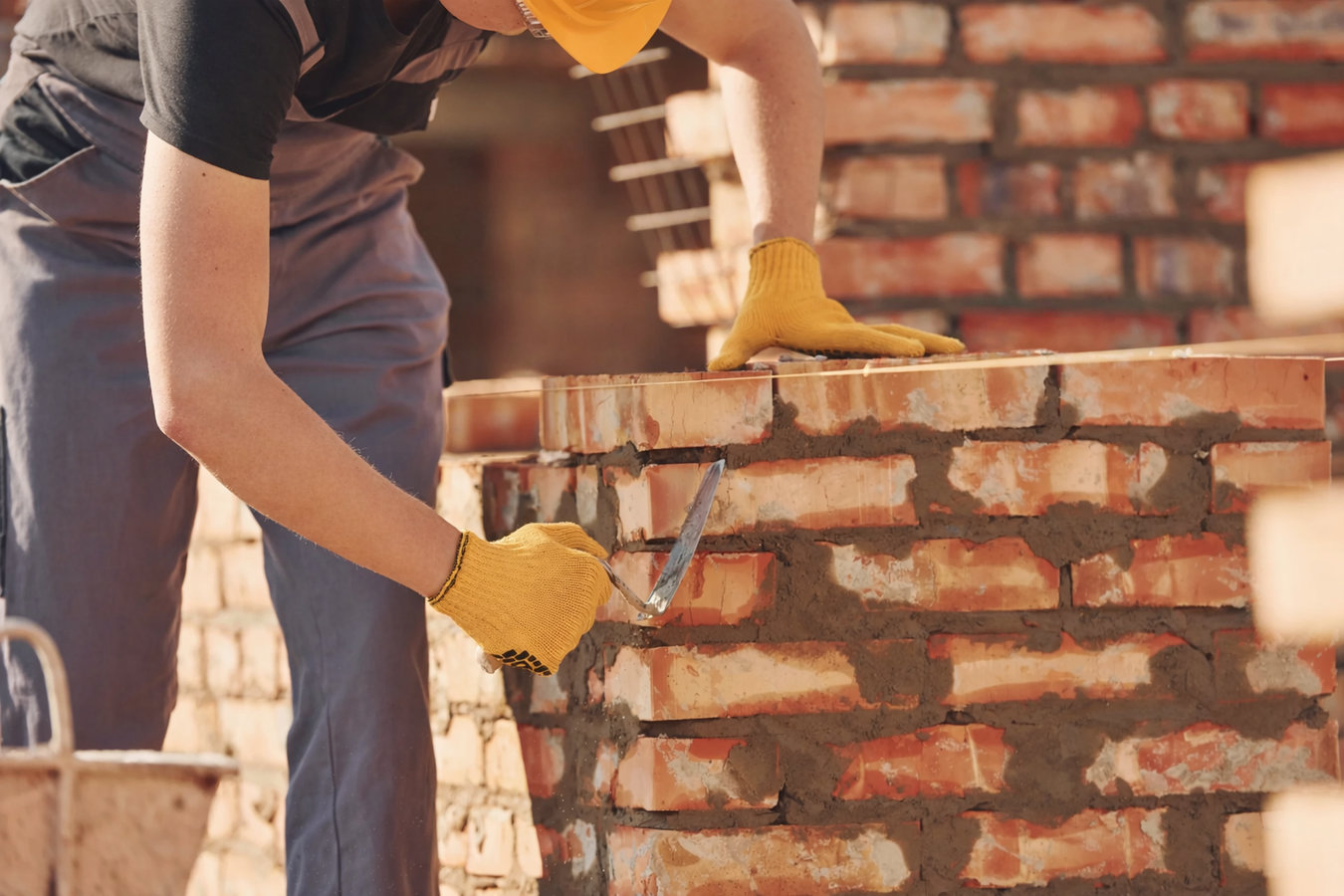
West Des Moines Concrete & Masonry provides masonry contractor services throughout Clive, handling brick repair, tuckpointing, driveway pavers, and retaining walls for homeowners across the city. We have served this part of the Des Moines metro since 2018 and respond to every inquiry within one business day.
The brick veneer fronts on Clive ranch homes from the 1970s and 1980s are showing their age - spalling faces, cracked units, and open mortar joints are increasingly common after five decades of Iowa winters. Brick repair addresses individual damaged units before the water infiltration spreads to adjacent bricks and the wall behind them.
Clive has a large number of homes built between 1970 and 1990, and many of them have brick veneer fronts with original mortar joints that are now 35 to 55 years old. Iowa freeze-thaw cycles eat at those joints every winter, and once water gets behind the brick, the deterioration accelerates through the wall.
Attached garages and concrete driveways are standard on nearly every Clive home, and those poured during the city's main growth period are now old enough to be cracking and heaving after decades of Iowa freeze cycles. Paver installations hold up better under repeated ground movement than a single poured slab.
Some Clive neighborhoods have modest grade changes and properties where the yard drops away from the house or toward a neighboring lot. Retaining walls in central Iowa clay need proper drainage built in from the start - walls without it shift and lean within a few seasons of heavy spring rain.
The ranch and split-level homes that dominate Clive's older neighborhoods often have concrete block or poured concrete foundations that have been through 40 to 50 years of Iowa soil movement. Horizontal cracks in block foundations and water seeping along the base of basement walls are among the most common calls we get from Clive homeowners.
A significant portion of Clive homes have wood-burning or gas fireplaces, and many chimneys from the 1970s and 1980s have mortar caps and crowns that have not been touched since they were built. Iowa winters crack caps open, and once water gets into the chimney structure, the damage moves fast.
Most of Clive was built during a 30-year stretch from the 1970s through the 1990s, and that means most homes are now between 25 and 55 years old. At that age, original concrete driveways have been through hundreds of freeze-thaw cycles, mortar joints in brick veneer are approaching or past their expected service life, and foundation walls have absorbed years of pressure from clay soil that expands in wet weather and contracts in dry spells. The timing is not dramatic - it is gradual accumulation, and most homeowners notice it in the spring when the winter's damage becomes visible.
February and March in central Iowa are particularly hard on masonry. Temperatures in Clive swing above and below 32 degrees repeatedly during late winter, which is more destructive to brick and concrete than a steady deep freeze. Water gets into tiny surface cracks, freezes, expands, and makes those cracks larger - then repeats the cycle dozens of times before spring. Driveways, chimneys, and brick walls on homes built in the 1970s and 1980s see this every season, and after 40 to 50 years the effects are clearly visible.
Our crew works throughout Clive regularly, and we understand the local conditions that affect masonry work here. The housing stock in Clive is unusually consistent - a high concentration of ranch and split-level homes built during the same two- to three-decade window - which means we see the same material choices, the same construction methods, and the same failure patterns repeated across the city. That familiarity matters when it comes to matching brick types, selecting the right mortar mix, and knowing where water infiltration typically originates on a home from this era.
Clive sits between Des Moines, West Des Moines, and Urbandale, sharing borders with all three. The City of Clive handles its own permits and inspections independently from its neighboring cities, so contractors working here need to pull from Clive's own building department rather than routing through Des Moines or West Des Moines. We are familiar with that process and handle the permit side for any work that requires it. The Greenbelt trail corridor and the NW 86th Street commercial strip are landmarks most Clive homeowners know well, and we work on homes throughout these neighborhoods.
We also serve Urbandale to the north, where the housing stock is similar and many of the same masonry concerns appear. Homeowners in neighboring West Des Moines and Des Moines can reach us just as easily - we cover the full western Des Moines metro with the same crew.
Tell us what you are seeing - cracked bricks, a leaning wall, a heaving driveway - and roughly how long it has been going on. We respond within one business day to schedule an on-site visit.
We come to your Clive property, look at everything in person, and give you a written estimate with itemized costs - not a rough number over the phone. There is no charge for the assessment and no obligation to proceed.
When the project requires a permit through the City of Clive, we file the application and manage the inspection. You do not have to make calls or track paperwork - we handle it from start to sign-off.
Our crew works without leaving a mess and walks you through the finished job before we leave. We explain any warranty terms and what to watch for - then inspection sign-off closes the job.
We respond to all Clive inquiries within one business day. No pressure, no commitment - just an honest look at what your property needs.
(515) 706-9183Clive is a city of about 17,000 people on the western edge of Des Moines, bordered by West Des Moines, Urbandale, and Des Moines itself. It is one of the more affluent communities in Iowa, with high rates of homeownership and home values well above the state average. The city is served by the West Des Moines Community School District, one of the higher-rated districts in Iowa, which draws families who tend to stay in their homes for many years. That long-term residency pattern means homeowners here typically invest in maintaining and improving their properties rather than deferring work to the next owner.
The housing stock is predominantly single-family, owner-occupied, and concentrated in the suburban build-out of the 1970s through 1990s. Ranch and split-level homes are the most common styles, and many have brick veneer fronts that are now showing the effects of 40 to 50 Iowa winters. Newer subdivisions on the western side of Clive, built in the 2000s and 2010s, are still relatively young but are reaching the point where first-round maintenance issues begin to appear. Clive shares its eastern border with Des Moines, and much of the western metro masonry work we do flows naturally between these two communities.
Restore structural integrity and stop foundation damage before it worsens.
Learn MoreBuild strong retaining walls that control erosion and define your landscape.
Learn MoreTransform any surface with the timeless look of natural or cultured stone.
Learn MoreConstruct solid, low-maintenance concrete block walls for any application.
Learn MoreInstall a reliable foundation block wall built for lasting structural support.
Learn MoreCreate an outdoor kitchen built from quality masonry for years of enjoyment.
Learn MoreDesign and build beautiful walkways that welcome guests to your property.
Learn MoreAdd classic brick walls that provide privacy, character, and lasting value.
Learn MoreCall us today or submit the contact form - we serve Clive and the surrounding area and respond within one business day.